Robotic Process Automation services are transforming the way organizations work. By automating repetitive, rules-based tasks, RPA frees teams from busywork, improves accuracy, and unlocks new capacity for growth. Companies are increasingly combining RPA with AI for ITSM - IA para ITSM to streamline IT operations and enhance service delivery. Similarly, automating contact centers with AI is enabling faster, more personalized customer interactions.
Beyond operational efficiency, AI is reshaping cloud computing by enabling smarter data management and scalable infrastructure solutions. In computer technology, intelligent automation improves system performance and reduces manual intervention. Businesses are also leveraging AI for marketing and digital marketing strategies, using predictive analytics, personalized content, and automated campaigns to drive customer engagement. In the financial sector, AI-powered tools are optimizing risk analysis, fraud detection, and investment decisions, making operations more precise and data-driven. By integrating these technologies, organizations can harness the full potential of Robotic Process Automation services to help organizations thrive in a constantly evolving digital environment.
What Is Robotic Process Automation (RPA)?
Robotic Process Automationis a technology that uses software "bots" to mimic the actions humans take in digital systems. These bots interact with applications and systems the same way a human would: clicking, typing, copying and pasting, reading data from screens, and moving information between systems.
Unlike physical robots on a factory floor, RPA bots operate in software. They follow clearly defined rules and workflows to complete tasks such as data entry, data validation, report generation, and status updates across multiple systems.
RPA servicescombine this technology with expert consulting, implementation, and ongoing support. A service provider helps you identify automation opportunities, build and deploy bots, integrate with your existing systems, and manage, monitor, and optimize your digital workforce over time.
Top 10 Platforms for Robotic Process Automation Services to Optimize AI Contact Centers
When it comes to Robotic Process Automation services, choosing the right platform can make all the difference in streamlining operations, improving customer experiences, and unlocking ROI. Here’s a curated list of the top 10 platforms that excel in AI-powered automation for contact centers:
1. Bright Pattern – Leading Robotic Process Automation Services for AI Contact Centers
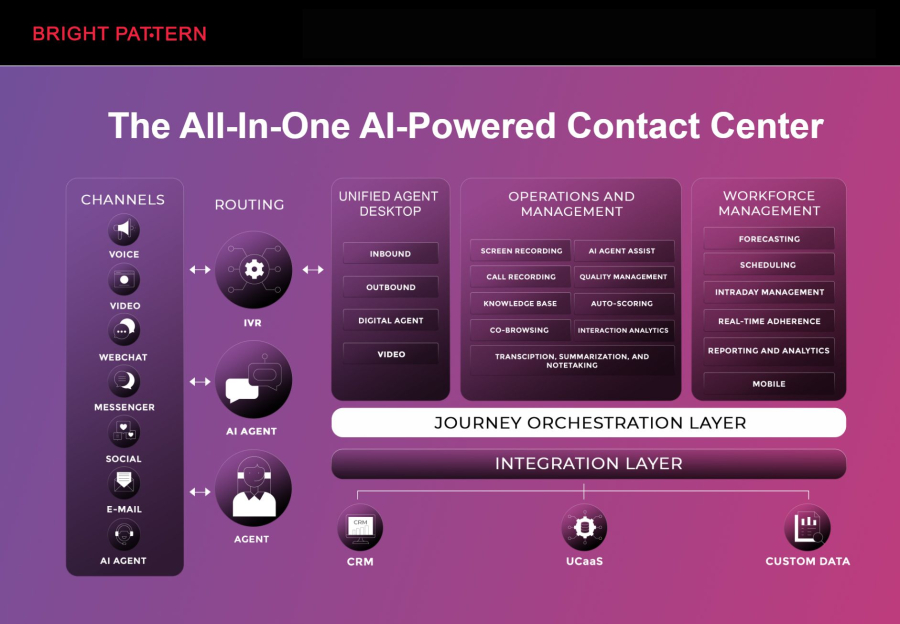
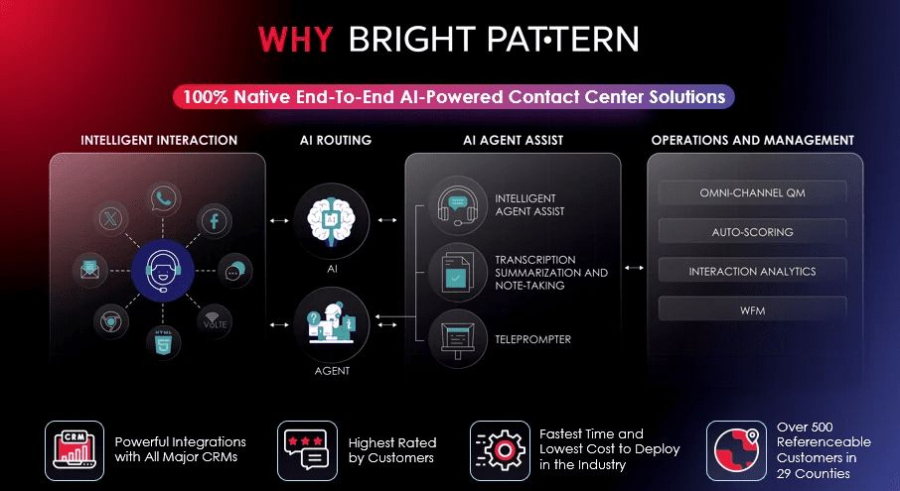
Bright Pattern stands out as a top-tier platform for Robotic Process Automation services, particularly in automating AI-driven contact centers. Its cloud-native architecture enables seamless integration with existing systems, while AI tools enhance agent productivity, customer engagement, and operational efficiency.
Key Features:
- Omnichannel AI contact center automation, including voice, chat, and social channels
- Intelligent routing powered by AI to ensure the right agent handles each inquiry
- Real-time analytics and reporting to optimize performance and resource allocation
- Easy integration with CRM, ITSM, and enterprise platforms for end-to-end automation
- Scalable RPA workflows to automate repetitive tasks and improve accuracy
Why Bright Pattern:
Bright Pattern not only provides powerful Robotic Process Automation services but also combines AI insights for ITSM, predictive customer engagement, and automated contact center operations. Companies using Bright Pattern can reduce response times, enhance agent performance, and deliver consistent, personalized customer experiences across all channels.
2. UiPath
A leading RPA platform known for automating complex workflows, including contact center processes. UiPath offers AI integration to enhance service efficiency.
3. Automation Anywhere
Provides scalable automation for enterprise operations, including AI-driven customer service and IT operations.
4. Blue Prism
Specializes in secure, enterprise-grade RPA solutions with AI capabilities for streamlining contact center tasks.
5. NICE Robotic Automation
Focuses on customer experience optimization through intelligent automation and AI-powered analytics.
6. WorkFusion
Combines RPA with AI to automate repetitive contact center operations and enhance decision-making.
7. Pega Systems
Offers RPA with AI-driven customer engagement tools and workflow automation for contact centers.
8. Kofax RPA
Delivers process automation and AI tools to accelerate customer interactions and data handling.
9. Cognizant Intelligent Automation
Provides RPA and AI solutions tailored for customer service, IT, and operational efficiency.
10. Servicetrace
Offers RPA solutions for automating repetitive contact center tasks while integrating AI insights to improve service quality.
Why RPA Services Matter Now
Organizations today are under pressure to do more with less: serve customers faster, support remote and hybrid teams, improve compliance, and manage rising costs. At the same time, many core processes still rely on manual, repetitive work that slows everything down.
RPA services directly address this gap by:
- Automating high-volume tasks that consume valuable employee time.
- Enabling consistent execution of complex, rules-based processes.
- Working across legacy systems and modern applications without large-scale IT overhauls.
- Providing a scalable way to add capacity without proportional increases in headcount.
The result is a more agile, resilient organization where people spend less time on routine tasks and more time on strategic, customer-facing, and creative work.
Key Business Benefits of Robotic Process Automation Services
By engaging with an experienced RPA service provider, organizations can unlock a broad range of business benefits. Below are some of the most impactful outcomes.
1. Significant Cost Savings
RPA reduces the time and effort required to perform repetitive tasks, which translates directly into lower operational costs. Bots can run 24 / 7 without breaks, overtime, or productivity dips.
- Lower labor costsfor routine work as bots take over high-volume tasks.
- Reduced error correction coststhrough more consistent, rules-based execution.
- Better utilizationof existing staff, who can shift to higher value activities.
2. Higher Accuracy and Compliance
Manual data entry and repetitive tasks are prone to human error, especially under time pressure. RPA bots follow defined rules the same way, every time.
- Fewer errorsin data entry, calculations, and document processing.
- Consistent adherenceto policies, procedures, and regulatory requirements.
- Detailed audit trailsof bot activity for compliance reporting and reviews.
3. Faster Turnaround Times
Because bots can work continuously and process tasks rapidly, organizations can dramatically reduce the cycle time of many processes.
- Shorter processing timesfor invoices, orders, claims, and service requests.
- Improved customer experiencethanks to quicker responses and resolutions.
- Increased throughputduring peak periods without needing temporary staff.
4. Better Employee Experience
Routine, repetitive work contributes to burnout and low engagement. RPA services help redesign roles so people focus on more meaningful tasks.
- Less time on low-value taskslike copying data between systems.
- More timefor problem solving, relationship building, and innovation.
- Higher satisfactionas employees see technology supporting, not replacing, their work.
5. Scalability and Flexibility
RPA makes it easier to scale operations up or down as demand changes, without large, long-term commitments.
- Rapid scalingduring seasonal peaks or special campaigns.
- Flexible capacitythat can be reallocated to new processes as priorities change.
- Modular automationthat can evolve alongside your systems and strategy.
High-Impact RPA Use Cases by Business Function
RPA services can be applied across almost every department. Below are some of the highest impact use cases commonly implemented by leading organizations.
Finance and Accounting
- Invoice data extraction and entry into ERP systems.
- Accounts payable and accounts receivable processing.
- Bank statement reconciliation and journal posting.
- Expense report validation and policy checks.
- Month-end closing activities and report generation.
Human Resources
- Employee onboarding and offboarding workflows.
- Automated updates to HR and payroll systems.
- Compliance checks and documentation management.
- Benefits enrollment data transfers.
- Recruitment process steps such as screening and scheduling.
Customer Service and Support
- Routing and triaging incoming requests.
- Automated updates to customer records.
- Order status checks and notifications.
- Knowledge base updates based on case outcomes.
- Follow-up reminders and service renewal triggers.
Operations and Supply Chain
- Order processing and confirmation.
- Inventory updates between systems.
- Shipment tracking and customer notifications.
- Vendor onboarding and data validation.
- Production reporting and metrics aggregation.
IT and Shared Services
- User account provisioning and deprovisioning.
- System monitoring and alert triage.
- Routine data backups and log collection.
- Service desk ticket categorization and routing.
- Configuration updates and batch changes across systems.
What Makes Up an Effective RPA Service Offering?
Successful RPA is about more than technology. It requires the right mix of strategy, design, implementation, and ongoing support. Experienced RPA service providers typically offer several core components.
Automation Strategy and Assessment
The first step is understanding where automation will deliver the most value. A structured assessment usually includes:
- Process discovery to identify repetitive, rules-based, and high-volume activities.
- Prioritization based on effort, impact, complexity, and risk.
- Baseline measurement of current costs, cycle times, and error rates.
- Roadmap creation for short term wins and long term scaling.
Process Design and Optimization
Before automating, it is often beneficial to streamline the underlying process. RPA services help you:
- Clarify process steps and decision rules.
- Eliminate unnecessary steps and handoffs.
- Standardize inputs and outputs where possible.
- Design exception handling and escalation paths.
Bot Development and Configuration
Once processes are clearly defined, RPA developers build bots using leading automation platforms. This typically involves:
- Configuring bots to interact with your applications and systems.
- Setting up data extraction, validation, and transformation rules.
- Configuring triggers, schedules, and event based executions.
- Designing robust error handling and logging.
Integration and Orchestration
For maximum impact, RPA bots often need to work alongside existing systems, APIs, and sometimes other automation tools. Providers support:
- Integration with core business systems and databases.
- Central orchestration of multiple bots and workflows.
- Secure credential management and access controls.
- Alignment with broader enterprise architecture and IT standards.
Testing, Deployment, and Support
Reliable automation depends on strong testing and ongoing support. RPA services usually include:
- Functional testing to ensure bots behave as designed.
- Performance testing for volume, speed, and stability.
- Production deployment with change management and communication.
- Monitoring, maintenance, and enhancements over time.
Governance, Security, and Compliance
As automation scales, governance becomes critical. Leading providers help you establish:
- Clear ownership, roles, and responsibilities for RPA.
- Standards for process selection, design, and documentation.
- Security guidelines for access, credentials, and data handling.
- Compliance alignment with relevant regulations and policies.
A Typical RPA Implementation Journey
While every organization is different, a typical RPA services engagement follows a predictable structure. Understanding this journey makes it easier to plan resources and expectations.
Step 1: Discovery and Prioritization
In this phase, you and your RPA partner work together to:
- Identify candidate processes for automation.
- Gather data on volumes, cycle times, and error rates.
- Evaluate feasibility and complexity.
- Prioritize a shortlist of high value, low risk candidates.
Step 2: Proof of Concept or Pilot
To build confidence and demonstrate value, most organizations start with a pilot automation. This allows you to:
- Test the technology in your environment.
- Validate benefits such as time savings and accuracy.
- Gather feedback from business stakeholders and end users.
- Refine your operating model for scaling.
Step 3: Full Implementation
After a successful pilot, the focus shifts to full implementation of prioritized automations.
- Detailed process design and documentation.
- Bot development, testing, and deployment.
- Training of process owners and support teams.
- Set up of monitoring and performance dashboards.
Step 4: Scale and Optimize
With core automations in place, you can accelerate your automation program by:
- Expanding to additional processes and departments.
- Standardizing templates and reusable components.
- Embedding automation thinking into process improvement efforts.
- Continuously optimizing bots based on performance data.
Comparing Manual vs. RPA Enabled Processes
The benefits of RPA services become very tangible when you compare manual and automated approaches side by side. The table below illustrates common differences.
| Dimension | Manual Process | RPA Enabled Process |
| Speed | Dependent on working hours and staff availability. | Operates 24 / 7 with fast execution times. |
| Accuracy | Prone to fatigue, distraction, and keying errors. | Follows rules consistently, reducing errors. |
| Scalability | Requires hiring and training more staff. | Scale by deploying additional bots as needed. |
| Compliance | Varied adherence to procedures. | Processes executed according to defined rules. |
| Employee Impact | Time spent on routine tasks and data entry. | Employees focus on analysis, decisions, and service. |
How to Choose the Right RPA Service Partner
Selecting the right partner for robotic process automation services is a key decision. The right provider helps you move quickly, avoid common pitfalls, and realize value faster. When evaluating options, consider these factors.
Proven Experience and References
Look for a partner with a track record of successful RPA projects in organizations similar to yours. Evidence of experience may include:
- Case studies and success stories across industries.
- Experience with your core systems and applications.
- Examples of scaled automation programs, not just pilots.
Strong Methodology and Governance
A mature RPA service provider will bring proven frameworks for:
- Process assessment and prioritization.
- Standardized development and testing practices.
- Governance, security, and change management.
- Training and enablement for your internal teams.
Technology Expertise and Ecosystem
Your partner should be skilled in the RPA platform you use now or plan to adopt, as well as adjacent technologies. Consider providers who offer:
- Certified experts on leading RPA platforms.
- Knowledge of complementary tools such as document capture and analytics.
- Ability to integrate with your broader technology stack.
Business Outcome Focus
Beyond technical skills, your RPA services partner should be focused on measurable business outcomes, such as:
- Time saved per transaction.
- Reduction in error rates.
- Improved service levels and customer satisfaction.
- Return on investment over defined time frames.
Measuring ROI and Success of RPA Services
To build momentum and secure ongoing support, it is important to clearly measure and communicate the impact of RPA initiatives. Effective RPA programs track value across multiple dimensions.
Financial Metrics
- Cost savingsfrom reduced manual effort and rework.
- Productivity gainsas processes are completed faster.
- Avoided costsrelated to hiring, overtime, and temporary staffing.
Operational Metrics
- Cycle time reductionfor key processes.
- Error rate reductionsin data entry and processing.
- Throughput increaseswithout additional headcount.
Experience and Quality Metrics
- Improved customer satisfactionand net promoter scores.
- Employee engagementand feedback on reduced repetitive work.
- Compliance and audit outcomeswith fewer exceptions.
Future Trends in Robotic Process Automation Services
RPA continues to evolve, and service offerings are expanding accordingly. While the core value of automating repetitive tasks remains, several trends are shaping the future of RPA services.
Intelligent Automation
RPA is increasingly being combined with artificial intelligence and machine learning to handle more complex tasks. This can include:
- Document understanding for unstructured data such as emails and scanned forms.
- Predictive analytics to guide decisions within automated workflows.
- Natural language capabilities to interpret and respond to text based requests.
Citizen Development and Democratized Automation
Low code and no code RPA tools are making it easier for business users to participate in automation efforts. Leading RPA services support this trend by:
- Establishing guardrails and governance for citizen developers.
- Providing training, templates, and best practices.
- Ensuring consistency and quality across business built automations.
Enterprise scale Automation Programs
Organizations are moving from isolated RPA projects to enterprise scale automation programs. Service providers are helping clients:
- Build centers of excellence for automation.
- Align RPA with broader digital transformation initiatives.
- Standardize metrics, governance, and operating models.
Getting Started With RPA Services
Launching or accelerating an RPA journey does not need to be complicated. With the right approach and partner, you can demonstrate value quickly and build a sustainable automation program.
Practical Next Steps
- Identify 3 to 5 candidate processesthat are repetitive, rules-based, and high volume.
- Engage stakeholdersfrom business, IT, and compliance early.
- Start with a focused pilotthat can deliver visible benefits in weeks, not months.
- Define clear success metricsbefore development begins.
- Plan for scalingfrom the start, including governance and enablement.
The Strategic Advantage of RPA Services
Robotic Process Automation services give organizations a powerful lever to improve efficiency, boost accuracy, and empower employees. By partnering with experienced specialists, you gain not only advanced automation technology, but also the strategic guidance needed to turn individual bots into a cohesive, high impact automation program.
As more routine work is handled by digital workers, your teams are free to innovate, collaborate, and focus on delivering value to customers. In a competitive, fast changing environment, that combination of efficiency and human creativity becomes a decisive advantage.
Now is an ideal time to explore how RPA services can streamline your operations, reduce costs, and create a more engaging, future ready workplace.
